
Note Values Explained: Semibreves, Minims, Crotchets, Quavers & Semiquavers
Music theory basics made simple: how many beats each note lasts, how many quavers make a minim, note grouping rules and rests — with a free practice quiz.
Understanding note values is the foundation of reading music. Once you know how long each note lasts, counting rhythm and reading a piece becomes far easier. This guide explains every common note value, answers the questions students search for most (like "how many quavers make a minim?"), and points you to a free quiz to test yourself.
The main note values and how many beats they last
In the most common time signature (4/4, where a crotchet gets one beat), the notes work like this:
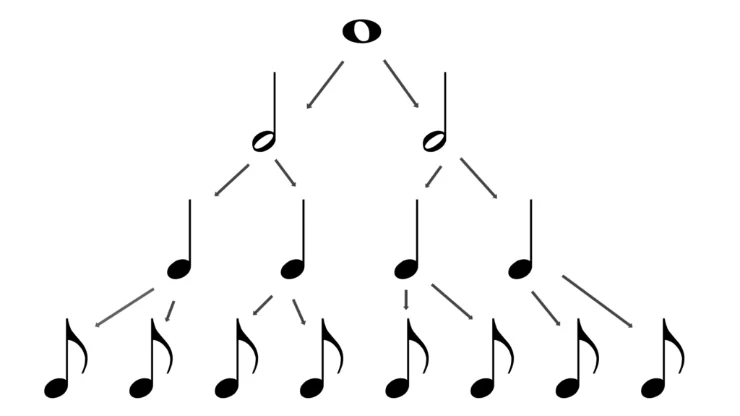
Each note is worth half of the one above it: a semibreve splits into two minims, a minim into two crotchets, a crotchet into two quavers, and so on. Hold that idea and the whole system clicks into place.
How many quavers make a minim?
Four. A minim lasts two beats, and each quaver lasts half a beat — so 2 ÷ ½ = 4 quavers make a minim. Here are the other common conversions students ask about:
What does each note look like?
So the quick trick: each extra tail halves the value. One tail = quaver, two tails = semiquaver, three tails = demisemiquaver.
Rests: silence has values too
Every note value has a matching rest — a symbol for silence of the same length. A semibreve rest lasts four beats, a minim rest two, a crotchet rest one, a quaver rest half a beat, and so on. Counting rests accurately is just as important as counting notes.
Grouping notes correctly
When you write several quavers or semiquavers in a row, they're usually beamed together in groups that show the beat, rather than written with separate tails. This makes the rhythm easy to read at a glance.
Test yourself with our free music theory quiz
The fastest way to lock this in is to practise. Try our free online ABRSM music theory quiz to check your understanding of note values, rests and grouping — great preparation for ABRSM theory exams.
Put it into practice with real music
Reading rhythm makes so much more sense when you're playing actual pieces. Download some free sheet music and try counting the note values out loud as you play — for example, our beginner-friendly guide to the Kenya National Anthem on piano.
Learn music theory with Cheza
Music theory is far easier with a teacher guiding you. At Cheza Music School in Nairobi, theory is woven into every lesson so you understand what you're playing — not just the notes, but the rhythm and structure behind them.
Frequently asked questions
How many quavers make a minim?
Four. A minim is two beats and a quaver is half a beat, so four quavers fit into one minim.
How many beats does a crotchet get?
One beat, in common time signatures like 4/4. It's the standard "counting" beat in most music.
What is the difference between a quaver and a semiquaver?
A quaver has one tail and lasts half a beat; a semiquaver has two tails and lasts a quarter of a beat. Each extra tail halves the value.
How many quavers make a crotchet?
Two. Each quaver is half a beat and a crotchet is one beat.
Enjoyed this? Take the next step.
Put what you've read into practice with a trial lesson at Cheza Music School.
Book a Trial Lesson → Book a Trial Lesson →C
Category: